

For anyone who wants to spend days among pine-fringed bays on Turkey’s southwest coast, the blue voyage is still one of the most authentic ways to holiday. Anchoring in bays with no phone signal, swimming at first light and watching the sunset from the deck — that is exactly what this traditional boat trip promises. But first-time planners often get stuck on the same questions: where to start, how many days, which boat? In this guide we bring together everything you need to know about this private gulet and sailing holiday, from what it is and the route options to pricing and practical tips.
What is a blue voyage, and where does it come from?
The idea takes its name from the boat trips that the “Fisherman of Halicarnassus” (Cevat Şakir Kabaağaçlı) and the writers, painters and travellers around him made along the Aegean and Mediterranean coast in the mid-20th century. Moving from bay to bay in small wooden boats, the group combined a life close to nature with a passion for discovering ancient ruins. Today the same spirit lives on: you charter a boat (usually a gulet, catamaran or motor yacht) by the day or week, follow a planned route from bay to bay and spend the nights at anchor or in small harbours.
This is where it differs from a classic hotel holiday: on a trip like this, the route, the pace and how long you stay in each place are largely shaped by your group’s preferences, together with the captain’s suggestions. You can stay one night in a bay and move on, or choose to spend another day at anchor somewhere you love. That flexibility makes the experience especially appealing to anyone looking for a holiday that is close to nature, calm and active at the same time.
Where to start: popular departure points
In Turkey, the heart of this tradition beats along the Muğla and Antalya coastline. The most popular departure points are:
- Göcek: With 12 wind-sheltered islands and calm bays, an ideal starting point for wind-sensitive groups and families. Many bays can be visited over short distances.
- Fethiye: Close to stops such as Ölüdeniz, Butterfly Valley and Gemiler Island, Fethiye is the classic start for many routes.
- Marmaris: Open to both the Aegean and the Mediterranean, Marmaris is the choice for routes towards Bozburun–Datça or the Greek islands. The nearby bays of İçmeler, Turunç and Kumlubük are also popular short day stops.
- Bodrum: A good departure point for anyone who wants a more cosmopolitan harbour atmosphere or short crossings to the Greek Dodecanese.
- Antalya / Kaş: The region to choose if you want to include the historic remains of the Lycian coast, such as the sunken city of Kekova.
At Aquinox Yachting we organise these routes with boats departing from Göcek, Fethiye, Bodrum, Marmaris and Antalya, and we usually recommend a region based on the type of bay our guests prefer — calm and sheltered, or more open and breezy.
Which boat should you choose?
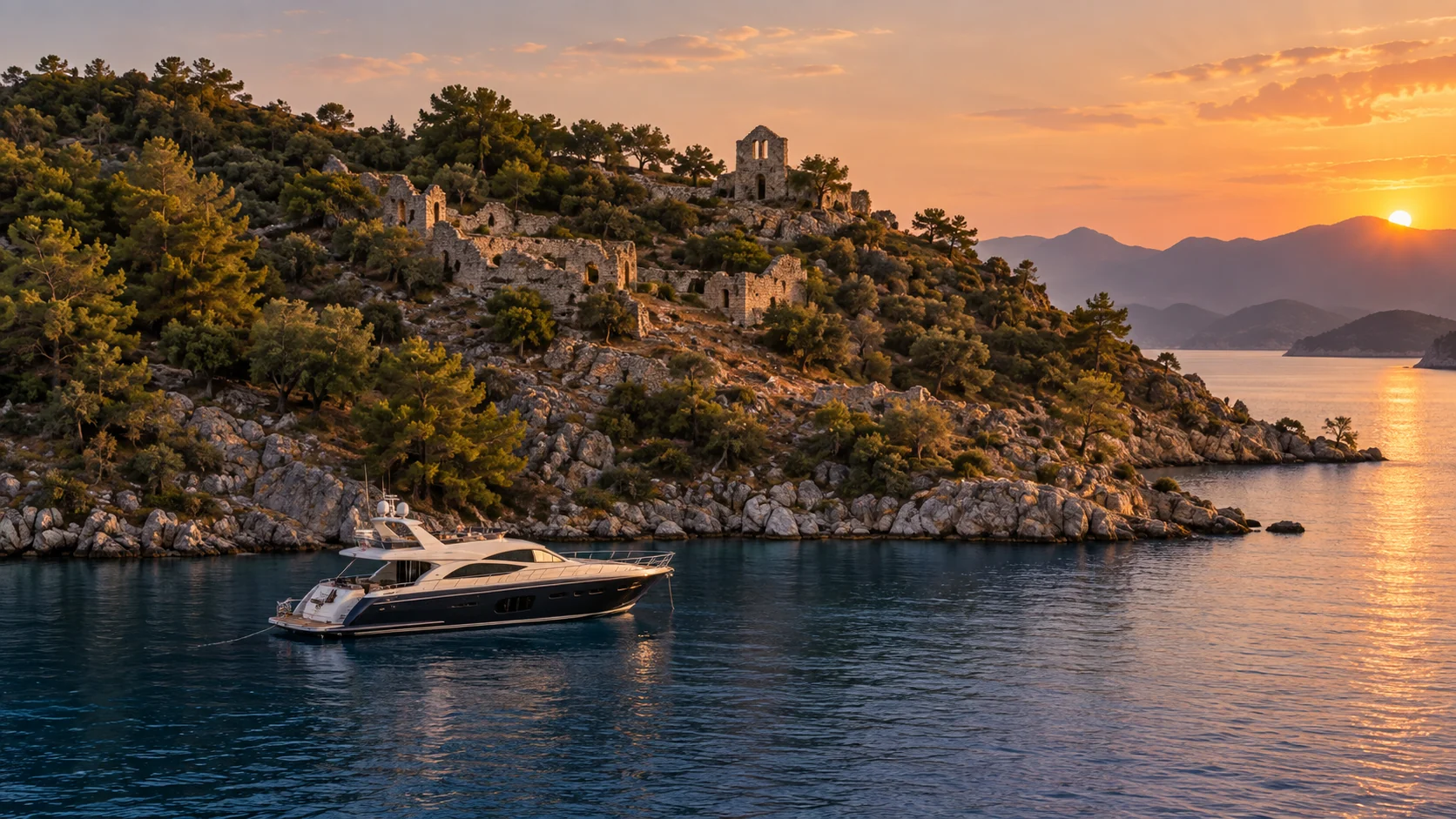
The first boat that comes to mind for this kind of trip is the gulet — with its traditional wooden build, wide deck and warm atmosphere, it has become the symbol of the tradition. Today, though, the options are more varied:
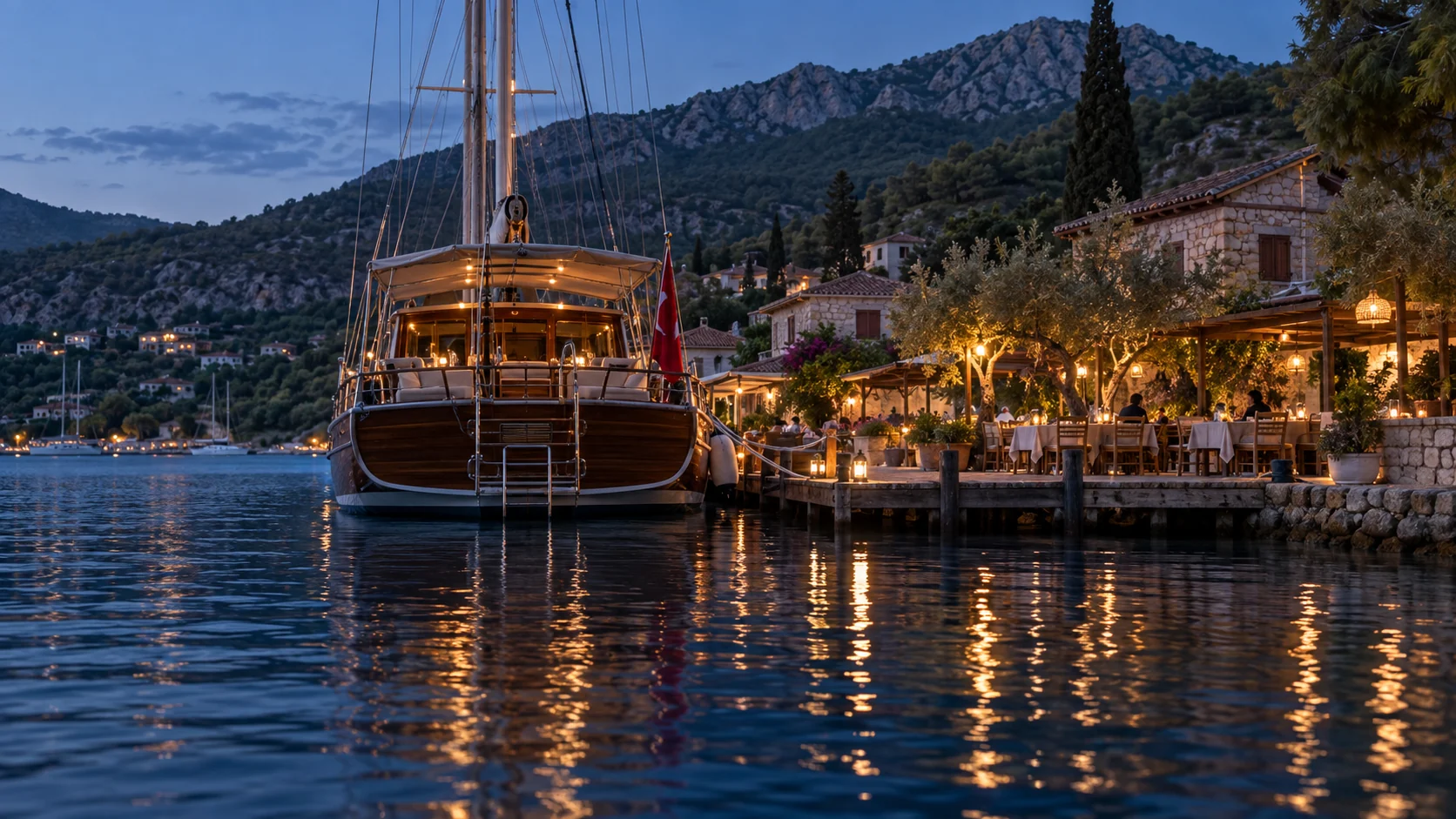
- Gulet: The classic choice for group and family holidays, with 4–8 cabins. Large sunbathing areas and wooden interiors deliver a true “slow holiday”. Usually 18–30 metres long, with one or two masts.
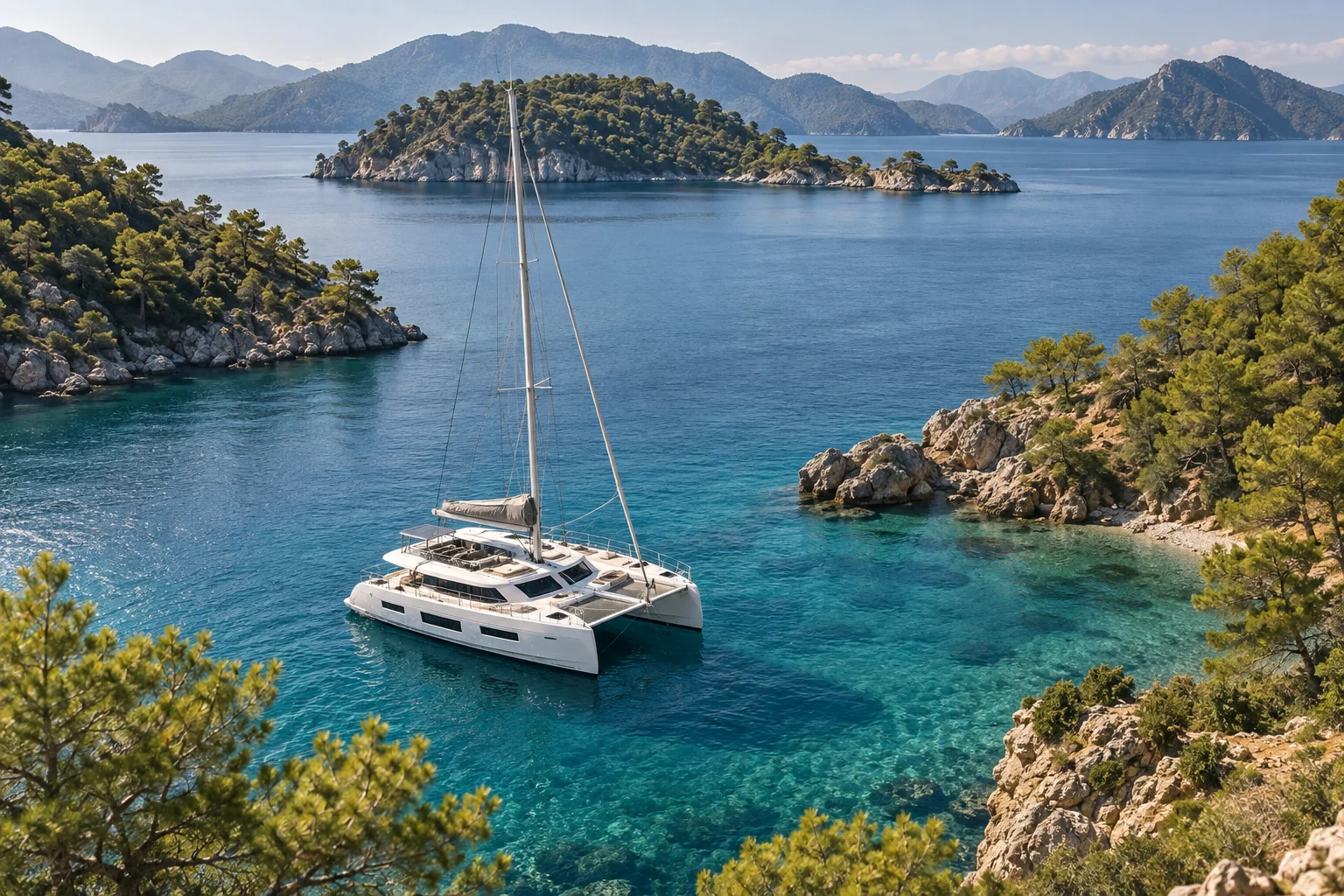
- Catamaran: Thanks to its twin hulls it rolls less, has a larger saloon and generally offers more comfort. It has an advantage over a gulet for guests prone to seasickness — see our catamaran charter guide for details.
- Motor yacht: A fast, predictable alternative for those short on time who want to see more bays. If you want to finish the route on schedule without depending on the wind, consider a motor yacht charter.
Whichever type you choose, the essence of these bay-hopping trips stays the same: swimming in bays by day, dinner on deck in the evening and getting far away from city noise.
Blue voyage or a standard yacht charter?
The two are often confused, but there is a subtle difference. With a standard yacht charter, the boat is usually used for day trips around a single marina or harbour, and guests sleep ashore in a hotel. On a traditional blue voyage, you also sleep on board — the boat becomes a “floating hotel”. That changes the whole experience: when you wake up you are already in a different bay, there is no need to head back to town during the day and the rhythm of the holiday follows the sea. If you are torn between a short day trip and a multi-day cruise, we suggest deciding based on how much time you have and how much you want to “switch off”.
A day on board
If it is your first time, it helps to know how a typical day unfolds. Mornings usually start with breakfast in the calm of the bay, followed by a swim before the sun climbs too high. Towards midday the boat heads for the next bay — passages usually take 1–3 hours, and if the wind is right the sails may go up. Lunch is served on deck at anchor, usually with meze and fresh salads. Afternoons are for swimming, snorkelling, canoeing or paddleboarding. In the late afternoon the boat reaches the day’s final stop, usually the bay or small harbour where you will spend the night. Dinner is either on deck or, if you like, at a restaurant in the bay, and the night ends under the stars to the sound of the waves. The cycle repeats every day with a similar rhythm, but every bay has a different view and atmosphere from the last.
Route options: how long should it be?
The length of the route is entirely up to you, but the most common options look like this:
- 3-day mini cruise: Suits a weekend escape; usually stays within one area (for example the Göcek islands). You can move between roughly 6–8 bays and islands.
- 4–5-day medium route: Covers two areas, such as the Fethiye–Göcek stretch or the Marmaris–Bozburun–Datça triangle, with a richer variety of bays.
- 7-day classic programme: The most popular length, with wider routes from Göcek to Kaş or from Bodrum to Marmaris that combine nature and historic stops. A sample week: day 1 Göcek islands, day 2 Kapı Creek, day 3 Fethiye and Ölüdeniz, day 4 Butterfly Valley, day 5 Gemiler Island, day 6 Yassıca Islands, day 7 back to Göcek.
- 10–14-day extended route: For groups with plenty of time; comprehensive programmes covering several regions, including crossings to the Greek islands.
Bays not to miss along the way
Whichever route you choose, some stops appear in almost every programme:
- Kapı Creek (Göcek): Deep and sheltered, a pine-scented anchorage especially popular on windy days.
- Yassıca Islands: Clear turquoise water and shallow sandy spots, ideal for swim stops.
- Gemiler Island: Where ancient Lycian ruins meet the sea — a special stop for history lovers.
- Butterfly Valley: A natural reserve surrounded by steep cliffs, reachable only by sea.
- Kekova: A unique area where you can sail over the remains of an ancient city that now lies below sea level.
These stops are included in a different order depending on where the route begins; before booking, our team asks which stops you want to prioritise and shapes the programme accordingly.
Who is it ideal for?
This kind of holiday suits anyone who values being close to nature and getting away from phones and city noise for a while. Honeymooners look for a calm, private setting; groups of friends prefer a programme that combines water sports by day with long conversations at night. For families, the large decks and flexible programme make holidays with children easier. Corporate groups may choose larger gulets and motor yachts for both team events and VIP hospitality. If you want a slower rhythm than a busy city break and are happy to let the day shape the plan, this is the right choice.
Prices for 2026
The cost of this kind of charter varies widely with the type of boat, the number of cabins, the season and the length of the route. As a rough guide:
- Standard gulet (4–6 cabins), per week: roughly €3,500–7,000 (depending on the season and the age of the boat).
- Mid-range catamaran, per week: roughly €6,000–12,000.
- Luxury gulet or motor yacht, per week: €10,000 and above, rising with the size and equipment of the boat.
- Day trip (shared or private boat): pricing per person or per boat varies by region, but a private boat for the day usually starts at a few hundred euros.
The price usually includes the crew (captain, cook, deckhand), fuel (up to a certain number of miles) and boat insurance; food and drink and harbour/marina fees are mostly charged separately. High-season prices (July–August) are noticeably higher than in the shoulder months of May–June and September–October, so if you are planning on a budget, consider shoulder-season dates. The cost per person also tends to fall as the group grows, so for a group of 8–10 friends a weekly gulet charter can be competitive with a hotel-based holiday.
What to pack
For days on a boat it is important to pack light and practical. Priorities are quick-dry swimwear and towels, sunscreen (reef-safe is better for the sea), a hat and sunglasses, light canvas shoes or water shoes, a light raincoat or windbreaker, personal medication and seasickness tablets or bands. Soft sports bags are preferred over large hard-shell suitcases, because cabin storage is limited.
Things to keep in mind
- Choosing the season: June to September brings the warmest sea and longest days, but July–August is also when the meltemi wind is strongest. For a calmer experience, choose May, late June or September–October.
- Group size and cabins: Most cabins are doubles, so for larger family or friend groups it pays to settle the cabin plan in advance.
- Route flexibility: Depending on the weather, the captain may suggest changes to the route; being open to that is part of the nature of this kind of trip.
- Book early: The best boats for July–August can be booked out months in advance; we recommend planning at least 2–3 months ahead.
- Extra services: Mentioning requests such as water sports equipment, a private chef menu or organised shore tours at the booking stage helps the days run smoothly.
- Sustainability: Not damaging the seagrass meadows (Posidonia) when anchoring, never throwing plastic into the sea and choosing reef-safe sunscreen all help keep this coast as beautiful for future generations. Many operators now use glass bottles and refillable water containers instead of single-use plastic; you can ask the crew about their practices in advance.
Frequently asked questions
What group size is this kind of boat trip suitable for?
It depends on the boat: small gulets take 4–6 guests, mid-size boats 8–12, and large gulets and catamarans up to 16. We help you choose the best boat for your group size.
What is the best month for a blue voyage?
June and September are popular because the sea has warmed up and the wind is calmer than in high season. July–August is the liveliest time, but also the busiest and most expensive.
What if I get seasick?
Catamarans are more stable thanks to their twin hulls, so we usually recommend them to guests prone to seasickness. Sheltered bays can also be prioritised over open-water passages when planning the route.
How are meals organised on board?
On crewed charters a cook is usually part of the team, and breakfast, lunch and dinner are prepared on board. Planning some evenings at restaurants in the bays or small fish restaurants is also a popular choice.
Is there internet and phone signal in the bays?
Most bays have mobile coverage, but the signal can be weak in some sheltered coves. That is often seen as part of the “switching off” this holiday offers.
Can we bring children?
Yes — gulets and catamarans suit family holidays thanks to their large decks. For families with young children, extra measures such as life jackets and safety netting can be provided on request.
Do we decide the route ourselves?
Our team prepares a route proposal based on the region and the weather, but guests’ wishes — staying longer in a particular bay or visiting a particular island — can be built in.
Can we charter without a captain (bareboat)?
In Turkey, commercial boat charters are generally operated with a captain. That is both a legal requirement and a practical advantage for guests in terms of route, weather and local knowledge. For licensed guests, exceptions may be possible for some smaller boat categories.
Can we cross to the Greek islands?
On routes from Bodrum and Marmaris, day or overnight crossings to nearby Greek islands (such as Kos, Symi or Rhodes) can be planned with the right paperwork and customs formalities. If you want such a crossing, let us know at the booking stage.
Conclusion
A blue voyage is one of the most enjoyable ways to discover Turkey’s most authentic natural beauty from the deck of a boat. With the right boat, the right route and the right timing, the experience can be both relaxing and unforgettable. Browse our destinations to find the region that suits you best and start shaping your holiday today.
Let us plan your route
Share your dates, group size and ideal holiday; we will shortlist the yachts and routes that fit.
Talk to a charter advisor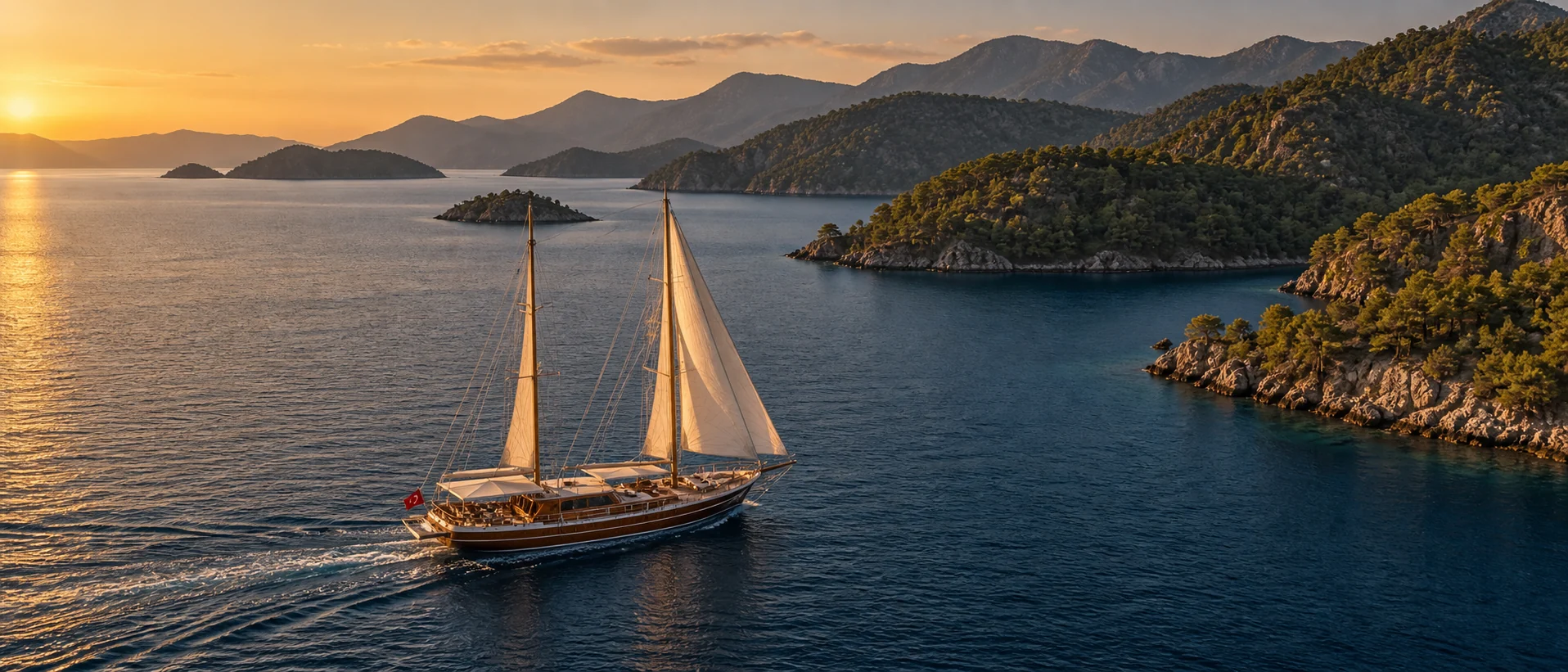



 English
 Turkish